
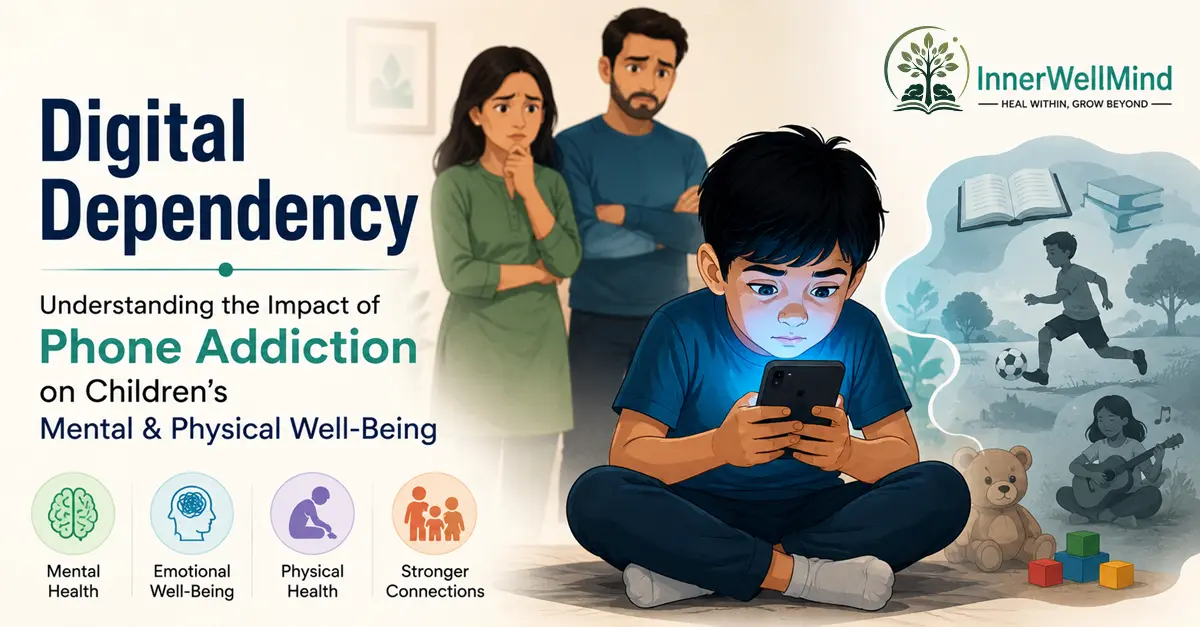
Digital dependency in children is very common now a days. All parents worry about their children dependency on phone and internet. Its is very crucial problem.
Children’s mental and physical development can be impacted by phone addiction in ways that are more profound than initially thought. It’s not just about “too much screen time”; it’s also about how their bodies, minds, and behaviours are shaped by continuous digital stimulation.
Impacts on Children’s Mental Wellbeing
1. Diminished Focus or Distraction
The brain is trained to seek out constant stimulation by frequent switching between apps, films, and games. Children may eventually find it difficult to concentrate on their studies or even simple jobs without becoming sidetracked. Hermawati et. al. (2018) conducted an empirical study on the use of digital media by infants under 2 years old. They found that children who used more than 3 hour of screen time per day had symptoms such as attention problems and hyperactivity.
2. Sleep Issues
Phone use disrupts sleep cycles, particularly before bed. The sleep hormone melatonin is suppressed by blue light, which makes it more difficult for kids to fall asleep and lowers the quality of their sleep.

3. Anxiety and irritability have increased
When they’re not using their phones, kids who use them a lot frequently become agitated or restless. This may result in dissatisfaction, mood changes, or even withdrawal symptoms. Studies shows that digital addiction increases depression and perceived stress and decreases academic performance among students (Coskun & Muslu, 2019).
4. Depression Risk
Children who are constantly exposed to social media comparisons or online affirmation may feel unworthy, alone, or excluded, which raises their risk of depression and low self-esteem. In India Kaur and Mehndroo (2024) conducted a study on Digital Addiction and Its Impact on the Mental Wellbeing of Adolescents. They found that excessive use of digital platforms has been associated with many psychological issues i.e. depression and stress among both males and females.
5. Decline in Social Skills
In excess of phones can reduce personal connections. Children may lose confidence in their ability to communicate in person, which could have an impact on their emotional intelligence and friendships.
Impact on Children’s Physical Wellbeing
1. Bad posture
Long-term posture problems might result from straining the neck and spine from staring down at a phone.
2. Vision Issues and Eye Strain
“Digital eye strain” is the term used to describe the dryness, discomfort, and blurred vision that can result from prolonged screen usage. Researches showed that Digital addiction affects children and adolescents psychologically and physically, e.g., vision loss, hearing impairment, and body obesity (Kabali et. al., 2015 & Domoff et. al.2019).
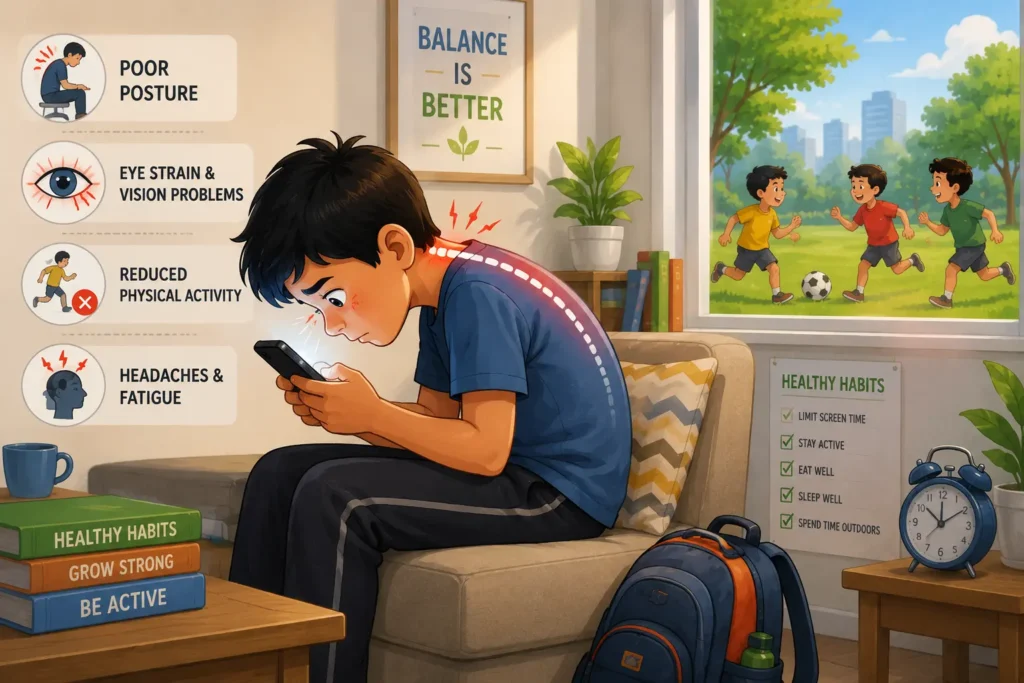
3. A decrease in physical activity
Increased screen time typically translates into less outside play and exercise, which raises the risk of obesity and stunted muscular growth.
4. Pain and exhaustion
Frequent headaches and general fatigue can result from prolonged phone use, particularly when combined with little sleep.
💡 Key Takeaway
Excessive phone use can affect children’s mental, emotional, and physical well-being. Early awareness, healthy digital habits, and active parental guidance can help children develop a healthier relationship with technology.
Conclusion
To have a better, more balanced relationship with technology, it is essential to recognize the symptoms of internet addiction and comprehend the available treatments. People and families can take proactive measures to avoid reliance and regain control over screen usage with greater understanding.
Teachers, parents, and other caregivers are essential in helping kids form positive digital habits. Setting reasonable screen time restrictions, encouraging outdoor activities, keeping open communication, and demonstrating ethical technology use can all considerably lower the danger of digital dependency. Seeking expert psychiatric advice can offer beneficial assistance and early intervention if a kid consistently exhibits emotional, behavioral, or psychological issues linked to excessive screen use.
Concerned About Your Child’s Digital Well-Being?
Every child is unique, and excessive screen use can affect each child differently. If you have concerns about your child’s emotional, behavioral, or psychological well-being, professional guidance can help identify the underlying issues and support healthy development.
Q1. What are the common signs of phone addiction in children?
Common signs of phone addiction in children include excessive screen time, difficulty concentrating, irritability when the phone is unavailable, sleep disturbances, reduced interest in outdoor activities, declining academic performance, and social withdrawal. If these behaviours persist and begin to interfere with a child’s daily life, professional psychological guidance may be beneficial.
Q2. How does excessive phone use affect children’s mental health?
Excessive phone use can affect children’s mental health by reducing attention span, disrupting sleep, increasing anxiety and irritability, lowering self-esteem, and contributing to symptoms of depression. It may also affect emotional regulation and healthy social development.
Q3. Can phone addiction cause physical health problems in children?
Yes. Excessive smartphone use may contribute to poor posture, neck and back pain, digital eye strain, headaches, reduced physical activity, and an increased risk of obesity. Encouraging regular breaks and outdoor play can help minimise these health risks.
Q4. How can parents help reduce phone addiction in children?
Parents can encourage healthy digital habits by setting reasonable screen time limits, creating phone-free family time, promoting outdoor activities, maintaining open communication, and modelling responsible technology use. Consistency and positive reinforcement are key to long-term success.
Q5. When should parents seek professional psychological support?
Parents should consider seeking professional psychological support if excessive phone use begins to affect their child’s emotional well-being, behaviour, sleep, academic performance, relationships, or daily functioning. Early intervention can help identify underlying concerns and provide appropriate guidance.
References
- Coskun, S., Muslu, G. (2019). Investigation of problematic mobile phones use and fear of missing out (FOMO) level in adolescents. Community Mental Health Journal, 55(6), 1004-1014. https://doi.org/10.1007/s10597-019- 00422-8
- Domoff, S. E., Harrison, K., Gearhardt, A. N., Gentile, D. A., Lumeng, J. C., & Miller, A. L. (2019). Development and validation of the Problematic Media Use Measure: A parent report measure of screen media “addiction” in children. Psychology of popular media culture, 8(1), 2. DOI: 10.1037/ppm0000163
- Hermawati, D., Rahmadi, F. A., Sumekar, T. A., & Winarni, T. I. (2018). Early electronic screen exposure and autistic-like symptoms. Intractable & rare diseases research, 7(1), 69-71. DOI: 10.5582/irdr.2018.01007.
- Kabali, H. K., Irigoyen, M. M., Nunez-Davis, R., Budacki, J. G., Mohanty, S. H., Leister, K. P., & Bonner Jr, R. L. (2015). Exposure and use of mobile media devices by young children. Pediatrics, 136(6), 1044-1050. DOI: 10.1542/peds.2015-2151
- Kaur, G., & Mehndroo, M. (2024). Digital addiction and its impact on the mental wellbeing of adolescents. Journal of Interdisciplinary Studies in Education, 13(S1).
